BENIN
Formerly the kingdom of Dahomey, Benin has a very rich history, the vestiges of which visitors can still see.
While Porto Novo is the administrative and political capital, with its lively streets, and Cotonou the economic capital where banks and ministries stand alongside traditional single-story dwellings, Abomey remains the royal city with its richly decorated palaces and its large square where the Amazons, the female army of King Glélé, used to gather.
Further north, the flora and fauna await discovery, with Pendjari National Park and the Natitingou waterfalls. Along the roads, forests of baobabs, majestic mango and avocado trees form an ideal canopy to cool the air.
Benin: Why choose this destination?
The birthplace of Voodoo, a witness to slavery, a former kingdom, a vast territory where nature is preserved, Benin promises many surprises!
A pioneer of democracy in Africa, Benin has managed to maintain its authentic character. Moreover, the hospitality of the Beninese people is legendary. Travelers cherish these precious moments shared with the local population, as the immersion in Beninese culture is truly profound.
From the arid mountains of the north to the lagoons and fine sandy beaches of the south, passing through the wooded savannas in the center, Benin offers a magnificent blend of African landscapes.
Benin’s attractions remain magical: colorful markets, villages nestled beside lakes, sacred forests. Not to mention the Brazilian influence, evident in the architecture and the language.
Benin offers a vibrant experience in the heart of a still relatively undiscovered country.
Benin: Commitment to responsible tourism
Organic farming is developing in Benin, and cocoa and legume plantations can be visited. Travelers can contribute to the purchase of equipment or products to help the farms survive: cocoa powder, cocoa butter, cassava flour, etc. They may also be offered the opportunity to participate in the production of palm or peanut oil. NGOs and associations are working on cleaning up coastal and lagoon banks, preserving threatened areas, and educating young people, so it is possible to join a specific project.
Practical information
Both local and international driving licenses are required. However, it is highly recommended to travel with a local driver.
Benin’s standard time is one hour ahead of Greenwich Mean Time (GMT +1). Benin is in the West Africa Time Zone (WAT).
Vaccinations against yellow fever and the DTaP-IPV booster are mandatory. Vaccinations against meningitis and typhoid are recommended.
Preventive treatment against malaria and a mosquito repellent specifically formulated for tropical areas are necessary.
Please note: your international vaccination certificate may be requested upon arrival at the airport.
Health and entry requirements can change, so please check with your ministry of foreign affairs and health before travelling.
Visitors wishing to travel to Benin are required to have a visa. They must possess a valid passport, a return ticket, and proof of vaccination against yellow fever.
The Beninese government introduced an electronic visa system on April 23, 2018. Visa applications can now be submitted online (“e-Visa”).
For more information on obtaining visas and the required documents, please contact the Beninese embassy or consulate nearest to your place of residence.
Benin uses the CFA franc. francs; francs. Exchange rates fluctuate, so please check a current rate before you travel.
220 Volts; 50 Hz. Depending on your country of origin, it is recommended to travel with an adapter. More information here: https://www.priseselectriques.info/benin/
Goun, Yoruba, Adja,… 56 languages are spoken there and French is the official language.
LET'S DISCUSS YOUR TRAVEL PLANS
-
 Benin
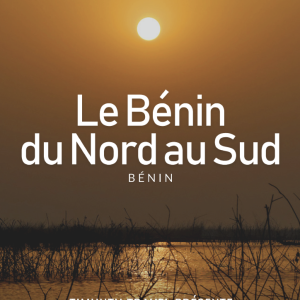
Benin from North to South
R42 850,00 View Itinerary This product has multiple variants. The options may be chosen on the product page -