
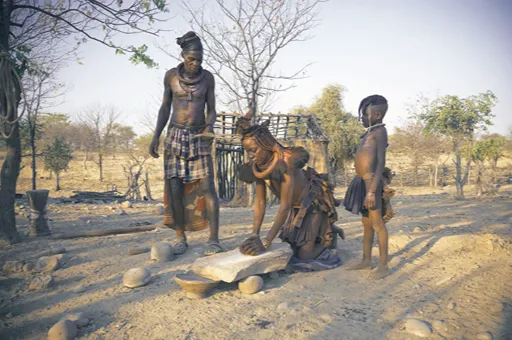
In this article, we explore Himba Nation.
It’s always fascinating to learn something new, something extraordinary from the life around us. Discovering new cultures and wanting to participate in activities that bring us closer to nature is always exotic, especially for travellers from all over the world. This is a highlight to be able to reach remote destinations that are incredibly different from our daily lives.

Who are the Himba?
The Himba people are known as Ovahimba, Ova means “beggar” and Himba means people.
This tribe is native to the Herero tribe that existed in the 16th century. In the 19th century, Namibia suffered from the bovine epidemic. Most of the livestock on which the Herero people depended perished, forcing them to find another subsistence elsewhere. Alternatively, the tribe moved south and started exploring different regions to survive. Even after facing a potentially fatal crisis, some members decided to stay rather than walk around the country in search of survival habitat. From time to time, the Herero tribe split into two and this is how the Himba identity was born.
The Ovahimaba is a fascination for all those who have seen the beautiful images of red-haired Himba clay people based in the northern region of Namibia along the Kunene River. As Africans, we are well known for our craftsmanship and the Himba Nation is no different in this regard. Their captivating handmade decorative jewelry made of copper and iron, their clay-covered hairstyles and their animal skin clothes are what sets them apart in this modernized world.
When Namibia gained independence in 1990, the Himba people emerged from their isolation and assimilated to other tribes. This exposed some of them to modern society, therefore, we now see them roaming the busy city streets and visiting local supermarkets.
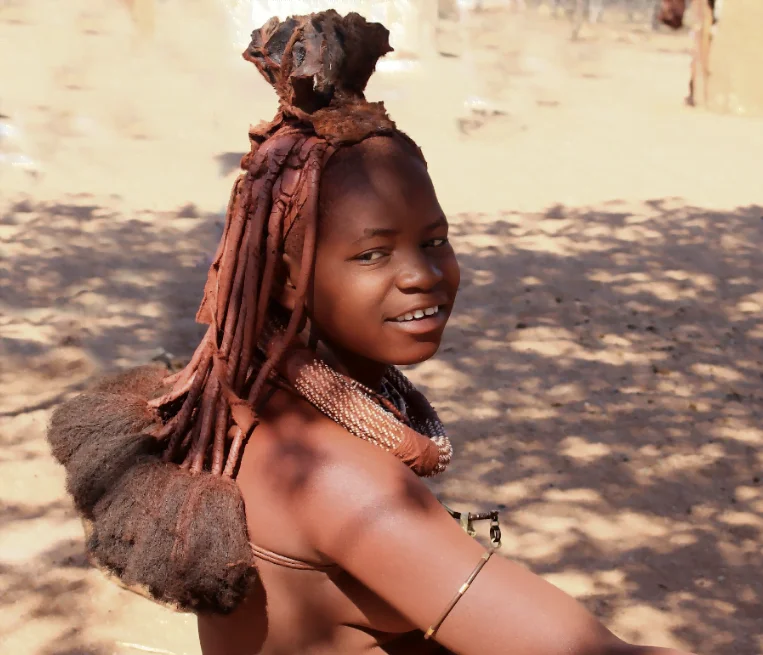
Why should a traveller visit a Himba village?
Travellers visiting Namibia rarely have the opportunity to take a detour through a Himba village and learn the traditions and techniques of the last traditional tribe of Namibia. Travellers who make a detour to a Himba village learn more about the culture and beliefs of the Ovahimba, such as the theory that the elder woman is responsible for ensuring that the sacred fire is lit permanently to protect the inhabitants from evil spirits. This is why they have succeeded in perpetuating their traditions for so long and not modifying them to welcome the foreign world from what they know.
While it is common for visitors to bring gifts for their hosts with them, it is important that you think about the type of gifts you give to Ovahimba. It is strongly discouraged to take gifts that would be of no use to them, such as electrical appliances because you will often find that there is no source of electricity. It is important that you remember that few places in the world are totally spared from modern culture.
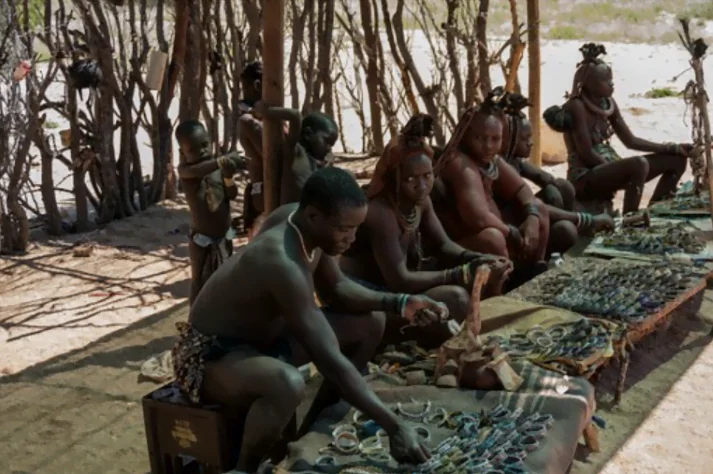
The Himba villages exist almost as a neutral zone. It allows the Himba community to carry out its traditional way of life while promoting sustainable tourism that provides them with income for necessities such as medical care. In these villages, travellers are allowed to interact with the locals and take photos with them, not forgetting to participate in cultural activities that will leave them with an authentic and memorable experience, like how the people of the tribe use the sacred pumpkin to store milk.
These Himba villages are worth a visit, and Timuntu Travel can organise a tailor-made trip to the local population to offer you privileged moments. Experience a journey off the beaten track and give it a deep meaning. Book your trip.
More about Himba Nation
Curious to read more? Find further background on Himba Nation on Wikipedia.
Ready to experience Africa for yourself? Explore our destinations or plan your journey with Timuntu Travel.