GHANA
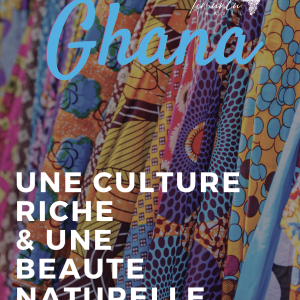
Ghana is bordered by Ivory Coast to the west, Togo to the east and Burkina Faso to the north. Today, Ghana has become a stable democracy and a safe country. The locals offer you a warm welcome, ideal for a first immersion in Africa. Travellers exploring Ghana discover a land of rich culture, preserved historical heritage and a local atmosphere set to the rhythm of Ghanaian music.
A country with a strong cultural identity and the cradle of Pan-Africanism, Ghana was the first African country to gain independence, showing its neighbours the way to decolonisation. In the Ashanti region, north-east of Accra, Kumasi was the capital of the kingdom of the same name. The Ashanti tribe still dominates the region through its legends and customs. Located within the Cultural Centre, the Ashanti Museum allows visitors to discover the Golden Stool and the Anokye Sword, sacred symbols, and their legends. North-west of Kumasi, history enthusiasts can reconnect with the height of Ashanti culture in the 18th century. Listed as UNESCO World Heritage sites, wooden, thatched or earthen houses bear witness to the past of this civilisation. The country has other magnificent sites including Fort Elima, Mole National Park and Lake Volta.
Its capital Accra is an essential cultural destination home to many sites that marked the history of slavery in Africa. It can also boast the Abura Botanic Garden: a true haven of peace that preserves rare species including several types of butterflies and birds, as well as superb exotic trees with medicinal properties.
Ghana is home to tropical vegetation in the south, while in the north of Ghana the savannah stretches as far as the eye can see. This attracts many visitors wishing to discover Africa’s natural riches. Herds of elephants in the Akwapim hills and various lakes such as Lake Bosumtwi. During a trip to Ghana, visitors create memorable experiences through cultural events, festivals, entertainment, nightlife and local cuisine.
Ghana: Why Choose This Destination?
Located in the south-east of the country, Accra, the capital, is a former European colony home to numerous cultural sites. Among the most popular are the National Museum of Ghana, dedicated to ethnographic objects, and the Kwame Nkrumah Memorial Park building, commemorating the country’s first president, which stands proudly on Independence Square. Visitors can also soak up the city’s dynamism in its restaurants and various markets bursting with colour and spicy scents, such as Kumasi market, one of the largest in Africa.
Ghana can be visited all year round. You may prefer the period between October and March, when the climate is slightly cooler and less humid.
Ghana: Commitment To Responsible Tourism
During the commemorations of the 400th anniversary of the beginning of slavery, Ghana launched a campaign called the “Year of Return” to boost responsible tourism in the country.
Practical information
Please note: the international vaccination certificate may be requested on arrival at the airport.
Health and entry requirements can change, so please check with your ministry of foreign affairs and health before travelling.
LET'S DISCUSS YOUR TRAVEL PLANS
-
 Ghana
Culture and Nature in Ghana
€2 050,00 View Itinerary This product has multiple variants. The options may be chosen on the product page