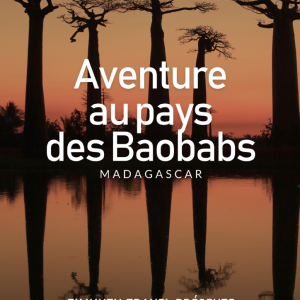
MADAGASCAR
Madagascar, best known for its unusual landscapes and its famous lemur, its emblematic animal, is an extraordinary giant island, also nicknamed “the Red Island” because of the laterite colour that tints its plateaus. Also known as the “Big Island”, it is the fourth largest island in the world by surface area (592,040 km2), after Greenland, New Guinea and Borneo. Undoubtedly the largest of them, the island of Madagascar neighbours other small, equally renowned “pearls of the Indian Ocean”: the Seychelles, the Comoros archipelago, Reunion and Mauritius.
Due to its relief and climate, Madagascar brings together a true mosaic of landscapes as well as exceptional biodiversity in its fauna and flora, characterised by a high rate of endemism. 98% of the species living on the island exist nowhere else! The remarkable fauna and flora are accompanied by epic landscapes of incredible diversity: you can go from tropical rainforest to desert in just 300 km. Few places on Earth offer such an intense kaleidoscope of nature. Here you’ll find sandstone canyons, limestone karsts, mountains, fertile hills with terraced rice paddies, forests of all kinds — rainforest, dry, spiny — and a soil rich in laterite that gave the country its nickname of “red island”. With 5,000 km of coastline, the sea is never far away, turquoise and idyllic in places.
Madagascar was populated by successive waves of migrants from all corners of the Indian Ocean. It doesn’t resemble any other country in Africa or Asia. There are fantastic sites to discover this unique history, but also many opportunities to meet the local populations and immerse yourself in their world: through village stays, long-distance trails, festivals. While Madagascar is known worldwide for its biodiversity, the island’s great richness is also, and above all, expressed through its popular traditions. Through its diversity and its qualities of sharing and hospitality, there is a genuine Malagasy wisdom to discover, where traditions and customs are still very much alive among the 18 distinct ethnic groups. Outside of a few major towns, traditional values remain very strong, and “fady” taboos and prohibitions are still very present.
Why Choose This Destination?
Madagascar is an impressive island, accessible to everyone. Its great natural and cultural diversity allows anyone to discover numerous endemic species in protected areas and enjoy a wide range of water activities.
Aside from the fact that the Big Island is said to resemble the shape of a left foot, it reflects a particular authenticity through its local crafts and traditions. Since culture in Madagascar varies from one region to another, spending time with locals offers a unique, warm experience and a chance to share their customs and traditions.
In Madagascar, the best time to really discover the country is between April and November. This is a period when the climate is favourable for travelling anywhere in the country, as it is the dry season. Visitors have more freedom to do several activities throughout the day.
The rainy season begins around the end of November and ends in March; many sites remain accessible, so visits and activities can be planned especially in the mornings.
Practical information
Local and international driving licenses are required.
Madagascar standard time is 3 hours ahead of Greenwich Mean Time (GMT+3). Madagascar is located in the East Africa Time zone (EAT).
No vaccine is mandatory. Please note: The yellow fever vaccine is required for travellers coming from countries at risk of yellow fever transmission. The international vaccination certificate may be requested on arrival at the airport. Health and entry requirements can change, so please check with your ministry of foreign affairs and health before travelling.
All visitors to Madagascar must obtain a visa to enter the country. In addition to obtaining a visa from an embassy or consulate in advance, foreign visitors can also obtain a visa online or on arrival. They must also hold a passport valid for 6 months after the planned return date and a return ticket.
Budget around €35–37 USD/person for a short-stay visa (under 30 days).
For more information on obtaining visas according to your nationality and the required documents, please contact the nearest Malagasy representation to your place of residence.
Madagascar uses the ARIARY (MGA)
Exchange rates fluctuate, so please check a current rate before you travel.
There are bureaus or banks where travellers can exchange money. In major towns, it is also possible to withdraw money from banks using international Visa credit cards.
127/220 Volts; 50 Hz. Depending on your country of origin, it is recommended to travel with an adaptor. More info here: https://www.priseselectriques.info/madagascar
Malagasy and French are the two official languages.
For the Malagasy language, there are dialects depending on the region. English is taught at school, but fewer people speak it fluently.