CONGO-BRAZZAVILLE
The Republic of the Congo, also known as Congo-Brazzaville, owes its name to the Italian-French explorer Pierre Savorgnan de Brazza. It is often confused with its infamous neighbour, the Democratic Republic of the Congo, as both territories share the name of the Congo River that separates them. Congo-Brazzaville is a small, enchanting country located on the west coast of Central Africa. After recent efforts to establish itself as a picturesque little hideaway, the country has proven to be a genuine destination of real value.
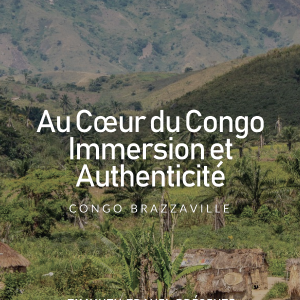
The country is 70% covered by tropical rainforest, home to various indigenous tribes. It also boasts wildlife and flora, plunging waterfalls, palm-fringed lagoons and lowland gorillas. From white-water descents on the wild and turbulent Djoué River, whose thrill can send you rushing down to the Congo River with exhilarating excitement, to calm, relaxed canoeing around M’Bamou Island, there is an adventure for every traveller’s needs.
Interacting with the locals is an experience just as fascinating as the country itself. If every country differs from the next, what makes the people of Congo-Brazzaville unique is the culture of the Société des Ambianceurs et des Personnes Élégantes (which translates as ‘The Society of Tastemakers and the Elegant’). These are men, or rather sapeurs (which loosely translates as dandies), who dress in elegant, colourful suits and strut around town. The suits are more than just eye candy; rather, they form an incomparable identity and culture that is admired by many in the country.
Congo-Brazzaville: Why choose this destination?
The Congolese are a friendly group of people. Once you set foot on their territory, you feel a growing urge to immerse yourself in their culture. Sampling the delights of an enticing cuisine is an easy way to engage with the local culture rather than simply being an observer, as you can tell a lot about a culture from the food they serve. The food alone is reason enough to clear your schedule, pack your bags, and head to Congo-Brazzaville’s lively local markets.
The Republic of the Congo’s equatorial climate means the country experiences high humidity throughout the year. May to September is considered the best time to visit the country, as it is the dry season, and your trip is unlikely to be interrupted by sudden rains.
Congo-Brazzaville: Commitment to responsible tourism
Visiting the Republic of the Congo will contribute to the conservation of wildlife and forests as well as the socio-economic empowerment of local people. In the past, the oil-rich country could rely on oil to fund its budgets. The fall in commodity prices has thus created room for tourism to become a key driver of the country’s economic development. As tourism is a relatively new industry in the Congo Basin, owing to Congo-Brazzaville’s previous obscurity, the country’s national strategy is turning toward the future in the hope that sustainable tourism can open up avenues for creating middle-income jobs in rural and urban areas, through a national tourism plan that involves environmental conservation, natural habitat preservation, and land-use planning and research programmes. Above all, sustainable tourism plays a key role in fostering the sustainable development of Congo-Brazzaville’s precious rainforests.
Practical information
Local and international driving licenses are required. However, it is strongly recommended to travel with a local driver.
Congo’s standard time is 1 hour ahead of Greenwich Mean Time (GMT +1). The Republic of the Congo is in the West Africa Time zone (WAT).
Yellow fever vaccination is mandatory for entry into Congo-Brazzaville.
Recommended vaccines: DTaP, hepatitis B, meningococcal meningitis (essential), malaria (essential), typhoid fever, hepatitis A.
Please note: your international vaccination certificate may be requested upon arrival at the airport.
Health and entry requirements can change, so please check with your ministry of foreign affairs and health before travelling.
Any traveller wishing to visit Congo-Brazzaville needs a passport valid 6 months after the intended return date. Obtaining a visa before departure is mandatory to travel to the Republic of the Congo, except for diplomatic passports. No visa is issued on arrival in the country. Visa applicants must submit and pay for their visa application online only.
For more information on obtaining visas and the required documents, please contact the Congolese representation nearest to your place of residence.
Congo Brazzaville uses the Central African franc (CFA). Exchange rates fluctuate, so please check a current rate before you travel.
230 Volts; 50 Hz. Depending on your country of origin, it is recommended to travel with an adapter. More info here: https://www.priseselectriques.info/congo-brazzaville/
Congo’s official language is French. National languages are also present in the country: Kituba and Lingala.