
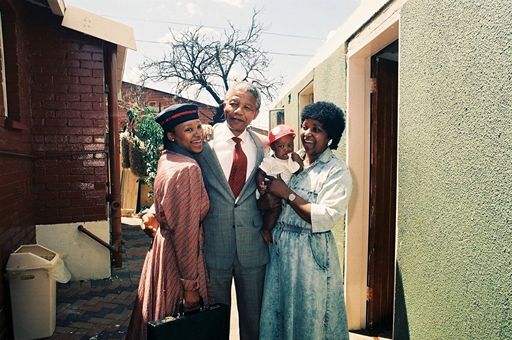
Winnie Madikizela-Mandela, often nicknamed “the mother of the nation”, has played a central and controversial role in the fight against apartheid in South Africa. His life, marked by resistance, suffering and determination, illustrates the complexities and contradictions of the struggle for freedom in a country torn by racial segregation.
Born Nomzamo Winifred Zanyiwe Madikizela in 1936 in the village of Bizana, in the eastern Cape Province, Winnie Madikizela grew up in a context of poverty and racial discrimination. After studying social work, she met Nelson Mandela in 1957, when he was already a renowned activist. Their marriage in 1958 marked the beginning of a personal and political union that would influence the course of South African history.
Winnie Mandela’s role in the fight against apartheid takes on a major dimension when Nelson Mandela is imprisoned in 1962. While her husband is detained at Robben Island, Winnie becomes one of the leading figures of the Resistance. Her home is constantly monitored, she is often arrested and imprisoned, and she suffers years of banishment and isolation. Despite this incessant repression, she continues to militate tirelessly, becoming a source of inspiration for many South Africans.
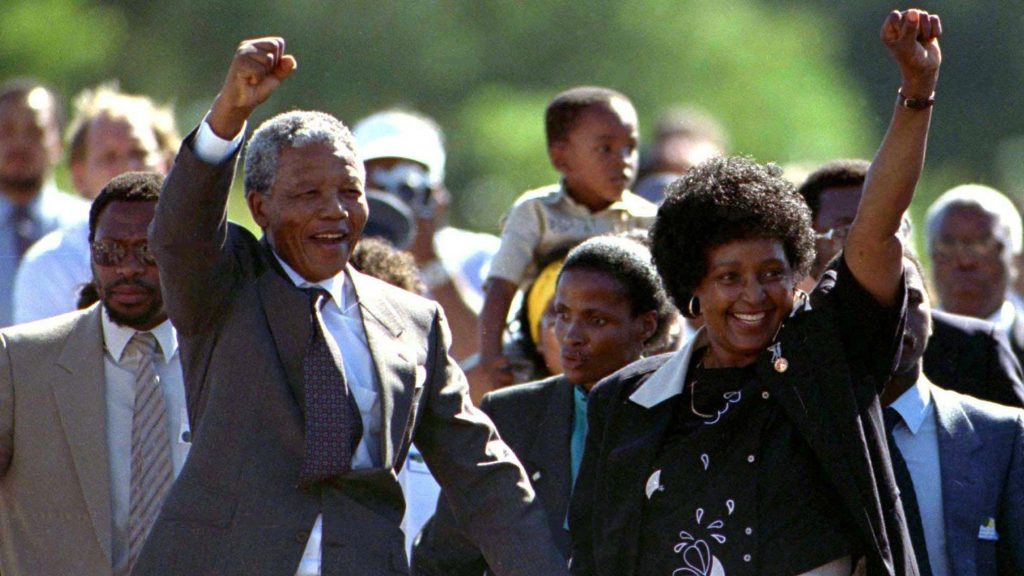
Winnie Mandela plays a crucial role in mobilizing young people and black communities. In particular, she is a key player in the Soweto uprising in 1976, when thousands of schoolchildren demonstrate against the imposition of Afrikaans in schools. Its ability to galvanize young people and denounce the injustices of the apartheid regime reinforces its status as an essential leader of the liberation movement.
Despite her heroic role, Winnie Mandela’s life is also marked by controversy. In the 1980s, his association with the Mandela United Football Club, a private militia, and accusations of violence and kidnappings tarnished his image. The death of Stompie Seipei in 1989, a 14-year-old activist, is particularly disturbing, leading to murder charges against him. These events underline the moral and ethical complexities faced by those who fight against oppressive regimes.
With the release of Nelson Mandela in 1990 and the transition to democracy in 1994, Winnie Mandela continues to play an active political role. She is elected MP and holds ministerial positions in the ANC government. However, his relationship with Nelson Mandela deteriorated, leading to their separation in 1992 and divorce in 1996.
Despite the scandals and criticism, the impact of Winnie Mandela on the fight against apartheid remains undeniable. She was a powerful voice against injustice and a figure of resilience in the face of repression. His ability to mobilize and inspire the masses was crucial in maintaining pressure on the apartheid regime, even in the darkest moments of South African history.
Winnie Mandela is an iconic figure in the fight for freedom in South Africa. His journey, marked by immense personal sacrifices and unwavering determination, contributed significantly to the end of apartheid. Although controversial, her legacy is that of a woman who embodied resistance against oppression and left an indelible imprint on the quest for justice and freedom in South Africa. Timuntu Travel invites you to discover his journey when you come on site, we have significant sites to reveal to you! In the meantime, you can discover his book: 491 Days: Prisoner Number 1323/69
(Image: © Ilan Ossendryver) Winnie Madikizela-Mandela (26 September 1936 – 2 April 2018) – Nelson Mandela Foundation
More about Winnie Madikizela-Mandela
Ready to experience Africa for yourself? Explore our destinations or plan your journey with Timuntu Travel.